

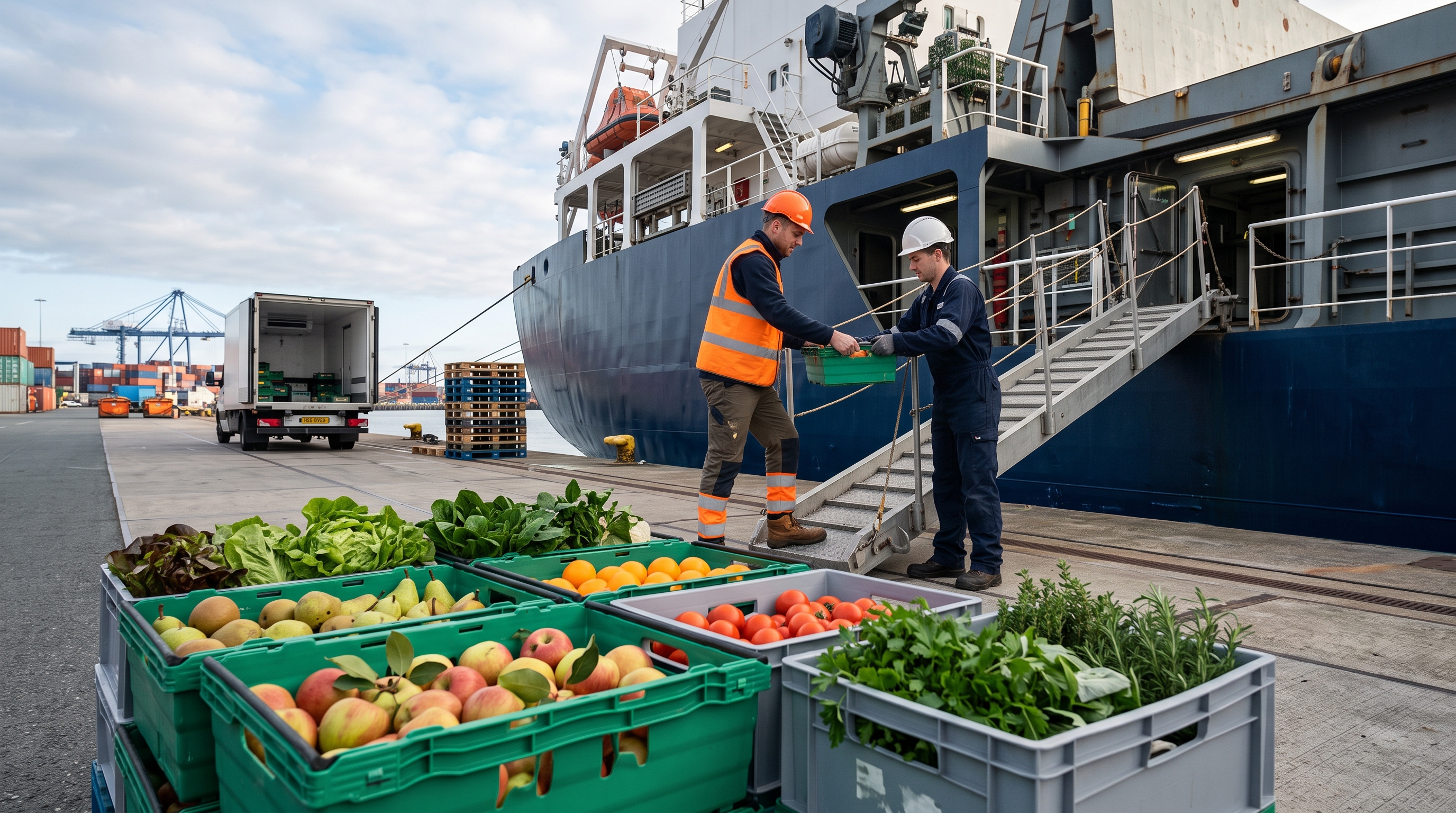
A piece of fresh fruit served onboard may appear simple. Yet before it reaches a seafarer’s plate, it has already passed through a carefully coordinated chain involving growers, local suppliers, logistics teams, port agents, vessel managers and onboard catering staff.
Every meal at sea begins somewhere on land.
It may start in an orchard, on a farm or at a regional producer. From there, ingredients must be selected, transported, stored and delivered within the limited window of a vessel’s port call. They then need to be managed onboard so that quality is maintained, waste is reduced and crews can enjoy varied, nutritious meals throughout the voyage.
The Home At Sea campaign’s From Tree to Ship concept explores this often unseen journey. It shows how local ingredients, global coordination and thoughtful catering come together to create meals that support both crew wellbeing and efficient vessel operations.
It starts with local knowledge
Fresh ingredients are closely connected to place. Different regions offer different products, growing seasons and culinary traditions.
Local sourcing can give vessels access to fresher produce and a wider variety of ingredients. It can also make it possible to introduce crews to regional dishes or provide familiar foods that reflect their own cultural backgrounds.
However, purchasing locally is not as straightforward as visiting the nearest market. Ship suppliers must understand which products are available, whether they meet the vessel’s requirements and how they can be delivered within the operational restrictions of the port.
Strong relationships with local suppliers are therefore essential. Trusted regional partners understand local availability, transport conditions, port procedures and potential constraints. Their knowledge helps procurement teams identify suitable alternatives when a requested product is unavailable or when a vessel’s plans change unexpectedly.
ForAVS Global Ship Supply, local expertise forms part of a wider international network. This combination enables vessels to benefit from regional knowledge while maintaining consistency across different ports and trading routes.
Planning around a moving destination
Unlike a restaurant or hotel, a vessel is rarely supplied at a fixed location.
Arrival times can change. Port calls may be shortened, delayed or cancelled. Weather, congestion, customs procedures and geopolitical developments can all affect when and where an order can be delivered.
This makes ship provisioning a highly time-sensitive process.
Before ingredients reach the vessel, supply teams must coordinate with ship managers, procurement departments, local suppliers, agents and transport providers. They need an accurate understanding of the crew size, voyage duration, storage capacity, dietary requirements and existing stock onboard.
They must also consider how long products need to remain fresh after delivery. A vessel preparing for a lengthy voyage will have different provisioning requirements from one making several port calls in quick succession.
Good planning helps ensure the right quantity of food is supplied at the right time. Too little can place pressure on the crew and create the need for emergency purchases. Too much can lead to spoilage, unnecessary cost and avoidable food waste.
Protecting quality throughout the journey
Fresh produce is particularly sensitive to time, temperature and handling.
Between the point of origin and the vessel, ingredients may pass through several stages of transport and storage. At each stage, poor handling can reduce quality or shorten shelf life.
Careful coordination is therefore required to protect products throughout the journey. Packaging must be suitable for transport, delivery vehicles must meet the needs of the order and perishable goods must be handled appropriately.
Once the products reach the port, another set of operational challenges begins. Deliveries may need to pass through security controls, customs procedures or restricted access areas. Depending on the vessel’s location, supplies may be transferred directly from the quay or delivered using a barge.
The final handover may take place within a narrow operational window, often alongside bunkering, maintenance work, crew changes and other port activities.
When the process works well, the complexity remains largely invisible to the people onboard. The crew simply receives fresh, suitable provisions that are ready to be stored and used.
From local ingredient to onboard dish
The journey does not end when the supplies cross the gangway.
Onboard catering teams then take responsibility for turning those ingredients into meals that meet nutritional, cultural and operational requirements. They must manage stock carefully, plan menus around product shelf life and make the best use of the ingredients available.
This is where local sourcing can become part of the onboard experience.
Regional vegetables, fruit, herbs, spices and other products can be used to create dishes inspired by the places a vessel visits. They can also be incorporated into familiar recipes that give crew members a connection to home.
For multinational crews, menu planning requires balance. Different nationalities may have different preferences, religious requirements and dietary expectations. An effective catering plan should offer variety while remaining realistic about storage, budgets and ingredient availability.
Training and culinary support can help onboard cooks use local products confidently, adapt recipes and avoid unnecessary waste. This turns provisioning from a simple purchasing exercise into a coordinated catering process.
Reducing waste through better coordination
Food waste at sea is not only a sustainability issue. It is also a sign of poor planning, inaccurate forecasting or ineffective stock management.
Ingredients may be wasted when quantities do not reflect crew numbers, when voyage plans change or when products are not incorporated into menus before their quality declines.
Closer coordination between supply teams and onboard catering staff can reduce these risks. Accurate stock information, realistic menu planning and appropriate portion control all help vessels make better use of the food they receive.
Local sourcing may also create opportunities to purchase products closer to the point of delivery, reducing unnecessary transport distances and allowing supply plans to respond more flexibly to changing schedules. The environmental benefit will vary according to the product and route, so it should not be assumed that every local purchase automatically has a lower footprint. The broader advantage is greater visibility and adaptability within the supply chain.
The people behind every meal
From Tree to Ship is ultimately a story about people.
It begins with growers and producers. It continues through local suppliers, procurement teams, logistics coordinators, port agents and delivery crews. It reaches the vessel through the work of onboard cooks and catering personnel.
Each plays a role in creating one of the most important parts of daily life at sea.
For seafarers working far from family and familiar surroundings, a fresh meal can bring comfort, routine and connection. It can introduce them to the culture of the region they are sailing through or remind them of food they know from home.
Through Home At Sea, AVS aims to make this journey more visible and demonstrate that every onboard meal is supported by a much wider network of expertise, care and coordination.
Because the journey from tree to ship is not only about moving ingredients. It is about turning global supply into an everyday experience that helps crews live and work more comfortably at sea.