

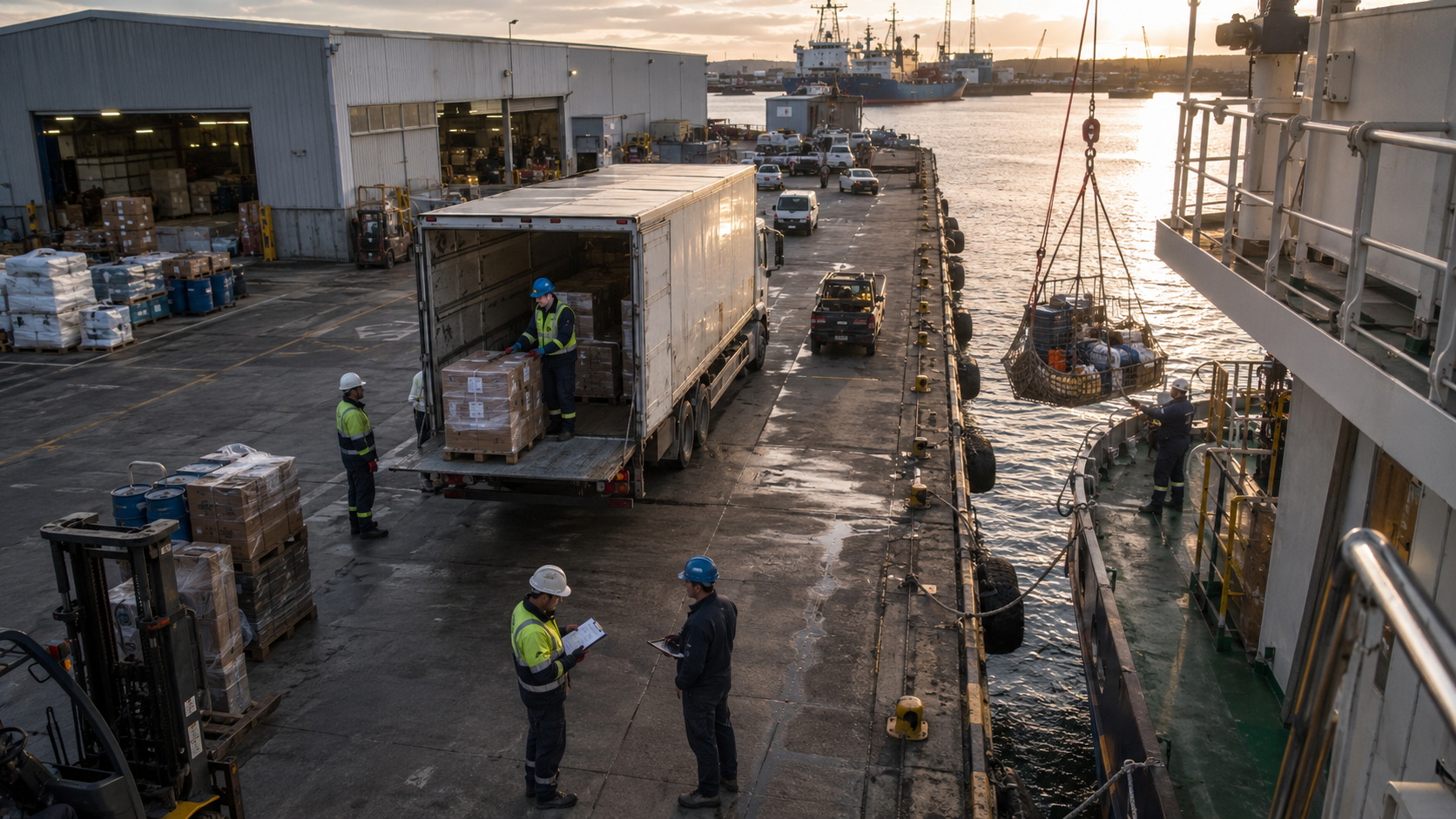
First-Mile and Last-Mile Logistics in Ship Supply: The Hidden Cost Drivers
In ship supply, the product price is only one part of the total cost. A quotation may look competitive at first glance, but the real cost can change quickly once first-mile transport, warehouse handling, customs steps, last-mile delivery, launch boat coordination, crane use, port access and waiting time are added.
For logistics managers, procurement directors and ship managers, understanding first mile last mile ship supply logistics is essential. The challenge is not only buying the right stores, spare parts, provisions or technical items. The challenge is getting them from the original source to the vessel deck safely, on time and with the right documentation.
In maritime logistics, small delays create large cost effects. A missed truck slot can delay customs clearance. A late warehouse release can miss the port gate cut-off. A delayed launch boat can create vessel waiting time. A missing delivery note can block final acceptance onboard.
That is why ship supply logistics must be planned end to end: from supplier origin to warehouse, from warehouse to port, from port gate to berth, and finally from quay or launch boat to vessel deck.
AVS Global Ship Supply & Catering supports ship owners, ship managers, procurement teams and logistics departments with global ship supply, port delivery coordination, technical stores, provisions, bonded stores and urgent vessel supply across international ports.
For coordinated vessel supply, visit Global Ship Supply, explore Global Coverage, or submit your request through Quick Quote.
What First-Mile Means in Ship Supply
First-mile logistics refers to the first movement of goods from the original source into the ship supply chain. In normal retail logistics, this may mean moving goods from a manufacturer to a warehouse. In ship supply, the first mile can be more complex because items may come from different suppliers, countries, warehouses or technical manufacturers before they are consolidated for a vessel.
A ship supply order may include:
- Technical stores
- Spare parts
- Provisions
- Safety items
- Deck stores
- Engine stores
- Bonded stores where applicable
- Chemicals
- PPE
- Galley equipment
- Cold chain products
- Urgent hand-carry items
Each category can have a different starting point, lead time and documentation requirement.
Why First-Mile Planning Matters
First-mile problems often become last-mile emergencies. If an item is not collected on time, packed correctly or released with the correct documents, the final vessel delivery can be affected.
Common first-mile issues include:
- Late supplier release
- Wrong pickup address
- Missing packing list
- Incorrect item description
- Wrong weight or dimensions
- Missing certificates
- Customs classification delays
- Poor packaging
- Incomplete cold chain preparation
- Unclear handover responsibility
- Lack of consolidation planning
When procurement teams focus only on the final delivery date, they may miss the early steps that determine whether the delivery is realistic.
First-Mile for Technical Stores
For Technical Stores, first-mile control is especially important because products may need certificates, serial number tracking, maker information, datasheets or packing protection.
A technical item may be small but critical. If it is collected late or shipped without the correct document, the vessel may face operational delay.
Buyers should confirm:
- Exact item description
- Maker or model details
- Quantity
- Weight and dimensions
- Packing method
- Certificate requirements
- Dangerous goods status if applicable
- Pickup deadline
- Required delivery date
- Final vessel location
First-mile accuracy prevents downstream friction.
Last-Mile: From Warehouse to Vessel Deck
Last-mile logistics in ship supply refers to the final delivery stage from warehouse, port supplier, truck, quay, launch boat or airport handover point to the vessel. This is often the most sensitive and expensive part of the process because it happens under time pressure and depends on port access, vessel schedule and local regulations.
In ship supply, last-mile does not end at the port gate. The delivery is only complete when the goods are accepted by the vessel or by the authorized receiving party.
Why Last-Mile Is Often Expensive
Last-mile delivery may involve several cost layers that buyers do not always see at quotation stage.
These may include:
- Truck delivery
- Port entry permits
- Security clearance
- Waiting time
- Launch boat hire
- Crane hire
- Rigging support
- Forklift handling
- Customs or bonded transfer
- Escort requirements
- Overtime charges
- Night delivery fees
- Weekend or holiday surcharges
- Failed delivery attempts
- Additional documentation
- Return handling
A small order can become expensive if it requires special access, urgent timing or vessel movement coordination.
From Quay to Vessel Deck
The final meters can be the most complicated part of the delivery. Goods may need to be lifted by ship crane, shore crane, forklift, pallet truck, gangway transfer, launch boat or small service craft.
Last-mile planning must answer practical questions:
- Is the vessel alongside or at anchorage?
- Is quay access available?
- Is the gangway safe for transfer?
- Is a launch boat required?
- Is a crane needed?
- Who provides lifting gear?
- Are the goods palletized?
- Are there heavy or oversized items?
- Is there a cold chain requirement?
- Who signs the delivery note?
- Is vessel stamp required?
- Are port security passes arranged?
These details should be clarified before the truck arrives at the port.
Last-Mile and Vessel Schedule Risk
Vessel schedules change frequently. Berth changes, anchorage delays, cargo operations, weather, customs holds and port congestion can all affect final delivery.
Last-mile logistics should be flexible enough to handle:
- ETA changes
- Berth changes
- Short port stays
- Night arrivals
- Delayed cargo operations
- Early sailing
- Anchorage delivery
- Agent instruction changes
- Restricted port access
- Urgent onboard requirements
A strong supplier does not only deliver goods. It manages the movement around the vessel’s operational reality.
Truck, Launch Boat, Helicopter and Crane Coordination
Different vessel supply situations require different delivery modes. The best option depends on the port, vessel location, cargo type, urgency, item size and safety requirements.
Procurement teams should not treat all deliveries as simple truck deliveries. Marine last-mile delivery can involve several transport and lifting methods.
Truck Delivery
Truck delivery is the most common method when the vessel is alongside and port access is available.
Truck delivery may require:
- Port entry permit
- Driver details
- Vehicle registration
- Delivery note
- Security clearance
- Agent coordination
- Berth number
- Receiving person details
- Forklift support
- Time slot booking
Truck delivery looks simple, but port rules can make it difficult if information is incomplete.
Launch Boat Delivery
Launch boat delivery is used when the vessel is at anchorage, offshore waiting area or a berth that cannot be reached by standard truck-to-gangway transfer.
Launch boat delivery may be used for:
- Urgent spare parts
- Small technical stores
- Documents
- Crew-related items
- Medical or welfare items
- Provisions in limited quantities
- Time-critical supply
The process usually involves moving goods to a launch point, loading them onto the boat, coordinating with the vessel and transferring the goods safely onboard.
Important factors include:
- Weather conditions
- Sea state
- Boat availability
- Cargo size and weight
- Safe transfer method
- Vessel readiness
- Daylight or night restrictions
- Port authority rules
- Agent coordination
- Delivery documentation
Launch boat delivery is often more expensive than quay delivery because it involves separate marine transport and tighter coordination.
Helicopter Delivery
Helicopter delivery may be arranged for offshore units or highly urgent cases, but it is not a routine option for most ship supply orders.
It may be considered for:
- Offshore platforms
- Offshore support vessels
- Remote units
- Critical medical supply
- High-priority technical items
- Emergency operational needs
Helicopter delivery requires strict planning, weight control, packing standards, aviation acceptance, safety clearance and receiving coordination.
Buyers should expect additional checks for:
- Weight and dimensions
- Dangerous goods restrictions
- Packaging suitability
- Flight window
- Offshore unit approval
- Weather conditions
- Safety documentation
- Landing or winching arrangements
Because of cost and complexity, helicopter delivery should be reserved for cases where urgency justifies it.
Crane and Rigging Coordination
Crane and rigging may be required for heavy, oversized or palletized goods that cannot be moved safely through the gangway.
Crane coordination may involve:
- Shore crane
- Ship crane
- Forklift
- Lifting slings
- Certified lifting gear
- Rigging crew
- Banksman or signalman
- Safe working load checks
- Cargo weight confirmation
- Lift plan for heavy items
The key question is: who provides and pays for the lifting equipment and personnel?
This should be clarified before order confirmation, especially for heavy technical stores, machinery parts, drums, pallets or equipment packages.
Cost Drivers Buyers Often Miss
Hidden logistics costs usually appear when the quotation does not clearly separate product price, first-mile cost, warehouse cost, port delivery cost and last-mile cost.
Procurement teams can reduce surprises by asking suppliers to show the main logistics assumptions in the offer.
Waiting Time
Waiting time is one of the most common hidden costs. It can occur when the truck, launch boat, driver, crane or delivery team waits due to vessel delay, port congestion, missing documents or berth change.
Waiting time may be caused by:
- Vessel not ready
- Berth change
- Cargo operation delay
- Port gate congestion
- Missing security pass
- Customs hold
- Agent instruction delay
- Receiver unavailable
- Crane not ready
- Weather restrictions
If waiting time is not agreed in advance, disputes may occur after delivery.
Failed Delivery Attempts
A failed delivery attempt can create additional cost because the supplier may need to return to warehouse, rebook port access, arrange another truck or reschedule launch boat delivery.
Failed attempts may happen due to:
- Wrong berth information
- Vessel sailed early
- Delivery window missed
- Wrong receiving party
- Missing permit
- Incorrect customs status
- Item not accepted onboard
- Agent instructions changed
- Weather-related cancellation
A clear delivery plan reduces this risk.
Packaging and Repacking
Packaging is often underestimated. Ship supply items may need stronger packing than normal commercial delivery because they pass through warehouses, trucks, port handling, forklifts, cranes, launch boats and vessel transfer.
Additional cost may come from:
- Palletization
- Wooden case packing
- Waterproof packing
- Cold chain packaging
- Dangerous goods packing
- Labeling
- Repacking after inspection
- Consolidation packing
- Oversized cargo protection
Poor packaging can damage products and create claims, even if the supplier delivered on time.
Customs, Bonded and Port Charges
Ship supply may involve customs, bonded stores, port authority rules and local delivery regulations.
Costs may include:
- Customs clearance
- Bonded warehouse handling
- Transit documents
- Port charges
- Gate fees
- Security charges
- Customs inspection
- Storage fees
- Duty or tax questions where applicable
- Document amendment charges
For international ship supply, buyers should clarify whether the price is ex-works, delivered to warehouse, delivered to port, delivered alongside or delivered onboard.
Urgency Premium
Urgent supply is more expensive because it reduces planning time. A last-minute RFQ may require express pickup, overtime packing, after-hours transport, emergency customs support or launch boat delivery.
Urgency can affect:
- Supplier selection
- Transport mode
- Warehouse labor
- Customs processing
- Port delivery slot
- Overtime charges
- Documentation speed
- Risk of error
Urgent delivery can be necessary, but buyers should understand why cost increases.
Documentation at Each Mile
Documentation is the control system of ship supply logistics. Without correct documents, goods may move physically but still fail commercially, operationally or legally.
Each mile has its own documentation needs.
First-Mile Documents
First-mile documents may include:
- Purchase order
- Supplier invoice
- Packing list
- Product certificates
- Datasheets
- Safety Data Sheets where applicable
- Batch or serial number records
- Pickup confirmation
- Export documents where required
- Temperature records where relevant
- Dangerous goods declaration where applicable
For compliance-related supply, procurement teams may also consider wider maritime requirements connected with IMO, SOLAS and MARPOL, depending on the product category.
Warehouse and Consolidation Documents
When multiple items are combined, warehouse control becomes important.
Documents may include:
- Goods received note
- Warehouse inspection record
- Consolidation list
- Repacking record
- Storage record
- Temperature log where relevant
- Shortage report
- Damage report
- Substitution approval
- Final packing list
If a vessel order contains multiple categories, consolidation reduces delivery friction but requires better control.
Last-Mile Documents
Last-mile documents may include:
- Delivery note
- Port entry permit
- Driver and vehicle details
- Launch boat booking
- Crane booking
- Customs release
- Bonded transfer note where applicable
- Proof of delivery
- Vessel stamp or signature
- Photo evidence where useful
- Shortage or damage record
- Final invoice support
The delivery note should match the purchase order and the actual goods delivered.
Cold Chain Documentation
For provisions or temperature-sensitive goods, cold chain control is part of the logistics plan.
Cold chain documents may include:
- Temperature records
- Product expiry dates
- Packing time
- Dispatch time
- Vehicle temperature check
- Delivery time
- Receiver confirmation
- Quality check records
For food safety topics, buyers may also review HACCP and ISO 22000 expectations.
How Suppliers Streamline End-to-End
A strong marine supplier does more than source products. It manages the full route from supplier origin to vessel deck, reducing friction at every step.
End-to-end coordination helps buyers avoid hidden costs, missed delivery windows and documentation gaps.
Early Route Planning
Suppliers should identify the route before confirming delivery.
This includes:
- Pickup point
- Warehouse or consolidation point
- Customs status
- Port entry requirements
- Final delivery mode
- Vessel ETA
- Berth or anchorage location
- Agent contact
- Required permits
- Lifting or launch boat needs
- Documentation requirements
Early planning helps prevent last-minute cost shocks.
Consolidation and Order Visibility
Consolidation reduces multiple deliveries, duplicated handling and unnecessary cost. It is especially useful when an order includes products from several suppliers.
A consolidated order should show:
- Item list
- Supplier origin
- Received quantity
- Missing items
- Substitutions
- Packing status
- Delivery readiness
- Required documents
- Final delivery plan
Digital tracking systems can help by giving procurement teams better visibility over order status, document status and delivery milestones.
Clear Cost Breakdown
A clear quotation should separate product price and logistics assumptions.
Useful cost lines may include:
- Product cost
- First-mile collection
- Warehouse handling
- Packing or repacking
- Customs or bonded handling
- Truck delivery
- Launch boat
- Crane or forklift
- Waiting time
- Overtime
- Documentation fees
- Final onboard delivery
This helps buyers compare offers more fairly.
KPI Tracking for Last-Mile
Last-mile performance should be measured because this is where many problems occur.
Useful KPIs include:
- On-time delivery rate
- Delivery success rate
- Waiting time
- Failed delivery attempts
- Documentation accuracy
- Damage rate
- Shortage rate
- Response time
- Emergency delivery success
- Cost variance
- Vessel feedback
- Proof of delivery completion time
KPIs help suppliers and buyers improve future deliveries.
Door-to-Deck Support
Door-to-deck logistics means managing the supply route from the original pickup or supplier point to final onboard delivery.
AVS can support door-to-deck coordination by combining sourcing, documentation, transport planning, port delivery and final vessel handover.
This can include:
- Supplier pickup coordination
- Warehouse consolidation
- Technical stores supply
- Provisions supply
- Bonded stores where applicable
- Customs and port delivery coordination
- Truck delivery
- Launch boat coordination where available
- Crane and lifting coordination where needed
- Proof of delivery
- Multi-port supply planning
For global coverage and multi-port delivery support, visit Global Coverage.
How AVS Helps Reduce Hidden Logistics Costs
AVS supports procurement and logistics teams by managing ship supply as a complete movement, not only a product transaction.
AVS helps reduce hidden logistics costs through:
- Early route planning
- Clear delivery scope
- Port-specific coordination
- Supplier communication
- Warehouse and consolidation planning
- Documentation control
- Technical stores coordination
- Provisions and cold chain support
- Launch boat coordination where required
- Delivery status updates
- Proof of delivery records
- Multi-port execution
- Urgent RFQ handling
For ship managers and procurement directors, this reduces uncertainty. Instead of discovering hidden charges after the order, logistics assumptions can be clarified before confirmation.
To request coordinated ship supply logistics support, submit your inquiry through Quick Quote.
Conclusion: Logistics Cost Is Built Mile by Mile
First-mile and last-mile logistics are often where hidden ship supply costs appear. A product may be priced correctly, but poor planning around collection, consolidation, customs, port access, launch boat use, crane coordination or documentation can increase total cost.
Procurement teams can reduce surprises by asking suppliers to clarify logistics scope, delivery mode, documentation, waiting time rules and final onboard handover responsibilities before the order is confirmed.
The most effective ship supply logistics model is planned end to end. It connects supplier pickup, warehouse control, port coordination and vessel delivery into one visible process.
AVS Global Ship Supply & Catering supports ship owners, ship managers, procurement directors and logistics teams with global ship supply, technical stores, provisions and coordinated door-to-deck vessel supply across international ports.
FAQ
What is first-mile in ship supply logistics?
First-mile in ship supply logistics is the first movement of goods from the supplier, manufacturer, warehouse or pickup point into the vessel supply chain. It includes collection, packing, initial documentation and movement toward consolidation or port delivery.
Why is the last-mile usually the most expensive?
Last-mile is often expensive because it may involve port access, waiting time, launch boat hire, crane use, security clearance, overtime, failed delivery risk and strict vessel schedule coordination.
How does the launch boat delivery work?
Launch boat delivery moves goods from a shore pickup or launch point to a vessel at anchorage or offshore waiting area. It requires boat booking, cargo preparation, vessel coordination, safe transfer planning and delivery documentation.
Who pays for the crane and rigging?
The responsible party depends on the quotation terms and delivery agreement. Crane, forklift, rigging crew and lifting gear costs should be clarified before order confirmation.
Can helicopter delivery be arranged for offshore units?
Helicopter delivery may be arranged for offshore units or urgent cases when operationally feasible. It requires strict weight, packaging, safety, aviation and receiving approvals.
What documents control last-mile?
Last-mile documents may include delivery note, port entry permit, driver details, customs release, launch boat booking, crane booking, bonded transfer note, proof of delivery and vessel stamp or signature.
How do delays in first-mile affect overall delivery?
First-mile delays can cause missed consolidation, late customs clearance, missed port delivery windows, higher transport cost and failed final vessel delivery.
Does AVS provide door-to-deck logistics?
AVS supports door-to-deck coordination by managing sourcing, collection, consolidation, documentation, port delivery and final vessel handover across international ports.
What about cold chain in last-mile?
Cold chain in last-mile requires temperature control, correct packing, dispatch timing, vehicle checks, delivery timing and receiver confirmation to protect food quality and safety.
How is last-mile measured for KPIs?
Last-mile can be measured through on-time delivery rate, delivery success rate, waiting time, failed delivery attempts, documentation accuracy, damage rate, shortage rate and proof of delivery completion time.
Are there standard SLAs for last-mile?
There can be agreed service levels, but last-mile SLAs vary by port, vessel schedule, cargo type, delivery mode, customs status and urgency. Clear delivery terms should be agreed before confirmation.
How do digital tracking systems help?
Digital tracking systems help procurement teams monitor order status, document status, pickup, consolidation, port delivery, last-mile movement and proof of delivery.