

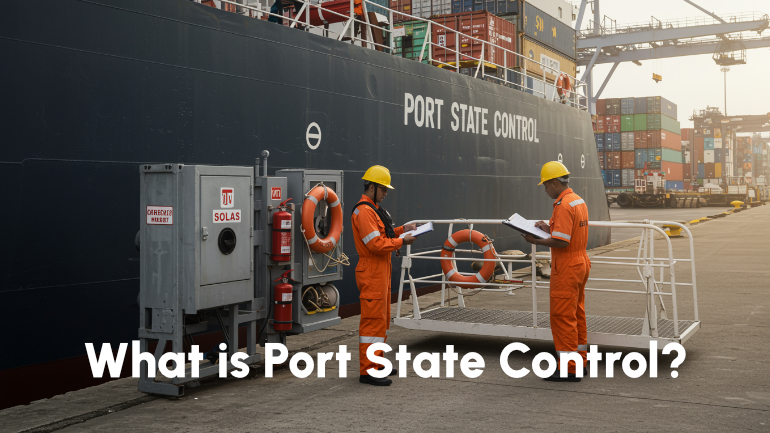
Port State Control refers to the right of maritime authorities in a port state to inspect foreign-flagged vessels for compliance with international conventions such as:
- SOLAS (Safety of Life at Sea)
- MARPOL (Marine Pollution)
- MLC (Maritime Labour Convention)
- ISPS Code (Ship Security)
- STCW (Training and Certification)
Legal Basis and Oversight
PSC is enabled by UNCLOS and administered under regional Memoranda of Understanding (MoUs), including:
- Paris MoU (Europe, Canada, Russia)
- Tokyo MoU (Asia-Pacific)
- USCG (United States-specific system)
- Black Sea, Indian Ocean, and other regional MoUs
Each MoU coordinates inspection practices, publishes white/grey/black lists, and shares deficiency records.
Why PSC Matters in Ship Supply and Operations
- Detention risks affect voyage planning, fuel consumption, and charter party compliance
- Repeated deficiencies can lead to bans or increased inspection frequency
- Equipment availability (e.g., PPE, lifeboat spares, MARPOL-compliant chemicals) is often part of PSC focus
- PSC impacts a ship's safety reputation and insurance exposure
Core PSC Inspection Areas
H3: Categories of PSC Focus
- Safety equipment: fire hoses, extinguishers, lifeboats
- Crew certification: STCW validity, rest hours, manning documents
- Pollution prevention: oil record books, bilge water separators
- Navigation and communication: ECDIS updates, GMDSS, radar
- Living conditions: food quality, galley hygiene, MLC standards
- Structural integrity: hull condition, watertight doors, load lines
PSC Inspection Process
- Arrival risk profile is assessed via MoU databases (e.g., prior deficiencies, flag performance)
- Initial inspection reviews certificates and general conditions
- Detailed inspection is triggered by findings, targeting high-risk systems
- Deficiencies are documented and must be rectified within deadlines
- Detention occurs if non-conformities pose serious safety risks
- Reports are uploaded to regional databases, impacting future calls
Comparative Table: Paris MoU vs Tokyo MoU
| Feature | Paris MoU | Tokyo MoU |
|---|---|---|
| Region | Europe, North Atlantic, Canada | Asia-Pacific |
| Risk Profiling System | New Inspection Regime (NIR) | Target Factor System |
| Database | THETIS | APCIS |
| Publication | Annual White-Grey-Black List | Annual Performance List |
| Focus Areas | Safety, ISM, MLC | Pollution, STCW, ISPS |
PSC Challenges and Best Practices
Common Operational Challenges
- Delayed access to updated certificates or manuals
- Expired consumables (flares, rations, medical kits)
- Poor crew understanding of drills and procedures
- Misalignment between planned maintenance and inspection readiness
- Logbook discrepancies
Best Practices for Compliance
- Use digital dashboards to track certificate expiry dates
- Conduct pre-arrival PSC mock audits with crew
- Maintain a buffer stock of PSC-sensitive consumables (e.g., line throwing appliances, LSA items)
- Keep updated IMO/ILO posters and signage onboard
- Train ship staff to answer PSC inspector questions confidently
Frequently Asked Questions About Port State Control (PSC)
What is Port State Control (PSC)?
Port State Control is an inspection mechanism allowing national maritime authorities to verify that foreign-flagged ships comply with international safety, pollution, and labor regulations. It is a second line of defense against substandard shipping.
Which international conventions does PSC cover?
PSC inspections commonly assess compliance with:
- SOLAS (Safety of Life at Sea)
- MARPOL (Marine Pollution Prevention)
- MLC (Maritime Labour Convention)
- STCW (Training and Certification)
- ISPS Code (Ship Security)
What triggers a PSC inspection?
Inspections can be:
- Random (periodic or based on targeting profiles)
- Triggered by reports or suspicion
- Risk-based, using the vessel’s flag, age, history, or recent deficiencies
What is a PSC detention?
A detention occurs when inspectors identify deficiencies that pose serious threats to safety, the environment, or crew welfare. The ship cannot leave port until issues are rectified and verified.
What is the Paris MoU and Tokyo MoU?
They are regional agreements that coordinate PSC activities:
- Paris MoU: Europe, North Atlantic
- Tokyo MoU: Asia-Pacific
Each maintains databases, risk ratings, and publishes annual performance lists of flags and recognized organizations.
How can shipowners prepare for PSC?
- Maintain all certificates up to date
- Conduct pre-arrival inspections
- Train crew for emergency drills and documentation reviews
- Stock critical PSC-sensitive supplies (e.g., fire safety gear, PPE, medical kits)
- Ensure logbooks and equipment are audit-ready
What happens after deficiencies are found?
Inspectors may:
- Issue a deficiency report
- Require corrective actions within a deadline
- Conduct a follow-up inspection
- Notify the vessel’s flag state and classification society
How does PSC affect ship supply operations?
Ship suppliers must ensure:
- Delivery items (e.g., LSA, FFA, provisions) meet regulatory standards
- Packaging, labelling, and expiration dates are compliant
- Supplies support the ship’s audit readiness, especially in port call clusters